Brick & Fortune.Investment House

Division: Capital

Capital That Works — Commercial & Development Theses in the UK

Capital is the desk where capital is put to work. We advise on commercial property, mixed-use and UK development theses — underwrite the return, arrange financing, and execute value-add from entry through exit. We do not run a members club, and we do not confuse Capital with Private Office representation.

Who This Desk Is For

  • Operators and developers seeking UK development or change-of-use execution with structured capital
  • Merchant and business capital putting funds to work on commercial yield and value-add theses
  • Family offices with direct commercial or mixed-use allocation programmes
  • Sophisticated investors deploying meaningful ticket sizes on return-led strategies
  • Funds and private credit counterparts needing a London desk for underwriting and process
High-angle aerial view over central London with St Paul's Cathedral and the Thames — capital thesis and execution desk

How We Work

From First Call to Exit

1. Initial Consultation

We understand your objectives, budget and timeline on a confidential first call.

2. Thesis & Budget

We define the investment thesis and set a realistic acquisition budget.

3. Off-Market Sourcing

We screen our closed network for matching assets before they reach the open market.

4. Analysis & Structure

We model returns and build the right SPV and tax structure with specialist advisors.

5. Negotiation

We negotiate price and terms on your behalf, acting solely for the buyer.

6. Completion

We coordinate legal process, financing and completion through to exchange.

7. Management / Exit

We oversee letting or resale, with a clear exit strategy from day one.

Four Operating Pillars

Thesis. Commercial Instruments. Execution.

01

Return-Led Brief

We work with operators, merchant capital and sophisticated investors who want capital working against a clear UK thesis — not inventory theatre.

  • Commercial and mixed-use underwriting to yield and exit
  • Development and bridging finance lined to the thesis
  • Terms architecture in the investor’s interest
  • Introduction-based engagement with institutional counterparties
02

Commercial Real Estate as the Instrument

The asset class is executable commercial stock: office, retail, light industrial, HMO and mixed-use — underwritten for income and repositioning upside.

  • Off-market commercial sourcing and investment-grade underwriting
  • Exit modelling before entry: refinance, disposal or hold-to-yield
  • End-to-end execution: legal, planning, contractor, disposal
  • Active oversight through refurbishment and repositioning
03

Development & Finance Architecture

Finance enables the thesis — development funding, bridging and commercial credit — not company formation as a product in itself.

  • Development finance, bridging and commercial lending pathways
  • SPV architecture sized to the project, not the brochure
  • SDLT, ATED, CGT and IHT assessed before commitment
  • Legal and tax coordination through to completion of the thesis
04

Six-Division Separation

Capital never absorbs Private Office, and Elite Developments never absorbs The Folio. Buyer side, developer side, heritage collection, return thesis and UK representation stay distinct.

  • Invest in London: buyer-side Zone 1 freehold acquisition only
  • Buying Agent: independent buyer representation across all London zones
  • Elite Developments: developer-side pipeline and launch access
  • The Folio: developer-side heritage restoration and landmark conversion only
  • Capital: commercial & development thesis, financing and execution
  • Private Office: retained UK representation and governance — not deal sourcing

Capital approach

We unify advisory, structure, and execution in one desk.

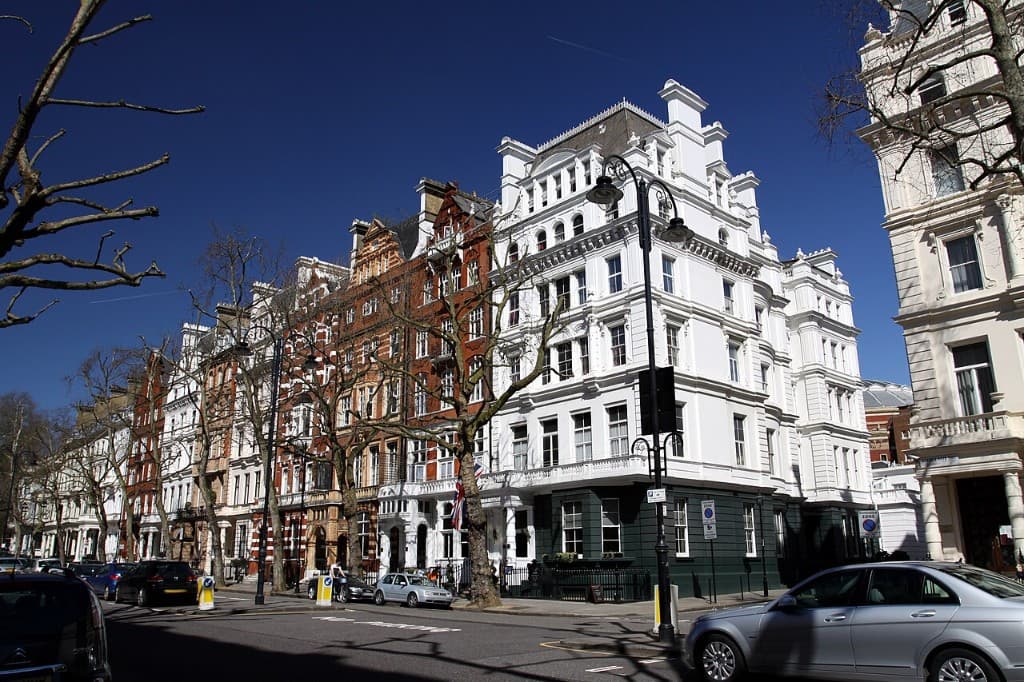
Queen's Gate — capital and structure discipline

Capital and structure discipline

Financing, tax and legal architecture are designed from day one with the thesis.

Tower Bridge at night — institutional investor coordination

Institutional investor coordination

Independent advisory, process governance, and end-to-end oversight for funds and family offices.

London residential streetscape — exit-oriented planning context

Exit-oriented planning

Exit scenario, cash-flow logic, and risk thresholds are defined before entry.

A Sample Investment Journey

From sourcing to exit, one commercial-conversion project.

Nine steps that summarise how the commercial-conversion model plays out end to end — from sourcing the asset to the capital returning to a new investment.

1. Sourcing

Large investment funds → private connections → off-market access.

25–30% below market price, London Zone 1, Grade II listed, freehold.

2. Project Decision

Technical survey, design drawings, permissions and the presentation file are prepared; the route is set as luxury residential or a serviced apartment (Airbnb).

3. Investor Process

1) Company formation (accountant) 2) 10% deposit 3) Solicitor engaged 4) Due diligence + survey 5) 20–30% further deposit 6) Escrow account.

4. Financing (Bridge Loan)

Mortgage broker → bridge loan (refurbishment + remaining balance) → refurbishment begins.

5. Valuation & Capital Release

The bridge loan is repaid via an interest-only mortgage; the released capital is redeployed into new investments.

6. Income Model

Airbnb rent (high) − interest payment = net cash in hand.

7. Exit Strategy

The building is sold (3–5x value uplift), the mortgage is repaid → profit.

Rental income was also pocketed throughout the 20 years.

8. Capital Cycle

The same capital cycle creates the ability to invest in more than one property.

9. Outcome & Goal

Grow your assets, secure your future: sustained returns and value appreciation.

Active Briefs

How capital is deployed on this desk.

Commercial & Mixed-Use Acquisition

Office, retail, HMO, light industrial and mixed-use — underwritten on yield and repositioning potential for capital that wants income plus upside beyond pure residential hold.

Change of Use & Planning Gain

Commercial-to-residential, office-to-resi and permitted development where planning gain drives the return. Planning risk and exit values are assessed before commitment.

Buy, Refurbish & Reposition

Acquire below intrinsic, refurbish to a defined scope, exit via resale, refinance or income hold. Capital is deployed against modelled GDV — not lifestyle imagery.

Development Finance & Value-Add Exit

Short-to-medium hold strategies with forced appreciation: development or light repositioning with a defined disposal or refinance path. Bridging in, GDV refinance or open-market exit.

Restaurant & Hospitality Investment (Turnkey)

Site sourcing, interior design and fit-out, furnishing, concept and menu development, through to turnkey opening — full-scope execution for investors entering hospitality as a commercial asset class.